- Home
- Start Here
Start Here: How to Use WiseGoals
There are many good reasons you might feel overwhelmed when trying to set goals.
- You could be new to goal setting and unsure how to go about it
- You may have tried it before and feel it didn’t go well
- Sometimes, it feels like it should be simple, but when you actually attempt it, you realise it's not
- You may be trying to fit the mould of some typical ideal person who sets goals
What exactly is goal setting?
I like to think of goal setting as more than just selecting a target or objective you want to achieve.
When you consider that there are different kinds of goal, short-term, long-term, performance, outcome, sub-goals that can all compliment each other and have different purposes it become clear that goal setting is more of a system using various tools and strategies.
The ongoing process of choosing a direction, planning a route, and adjusting your actions as you move toward what matters most.
Goal setting is a way of engaging in the process of change and progress. It includes reflection, self-awareness, decision making, planning, breaking things down, predicting obstacles, habits, and more.
When is goal setting helpful?
Wherever there is a problem, something which causing you pain, goal setting can help. These examples below may seem like small changes, but to the person who experiences it, it is in no way small for them. It is life changing.
- The 50 year old women who is overweight and couldn't stomach going to the gym for decades finding a new way that works for her and sharing how enjoyable it is to be free of comparison.
- The 40 year old man who is in a basic job as it's safe and predictable. Overtime he feels like he is wasting his potential. When he explores and finds a way to enjoy it more, while also exploring new options.
- The 50 year old man who wants to eat well as he is tired - after years eating take aways and junk food and hating salad, he finds a way in that suits him. He begins to enjoy eating healthy food and has more energy leading to further possible changes.
- The 40 year old women who goes back to university to study after a long absence while also looking after 4 children. As she attempts to juggle all this she struggling with the stress of it all and finds a way to lower her own stress while also developing ways to complete her work more efficiently.
These changes to everyday life situations - the real problems people face - this is where goal setting and planning can help. Through creating the space to explore the problem and what you want to happen you can improve your chances of positive change.
Goal setting is a system that enables you to discover what you want to change right now and learn that you can do it. The way to progress isn't always about more striving more and trying harder. Sometimes it's about becoming clearer- the clouds of confusion parting, and the way showing itself.
Using WiseGoals to help you choose the best starting point
Most people enter the WiseGoals process at different points.
You can use the guide below to identify your most helpful entry point.
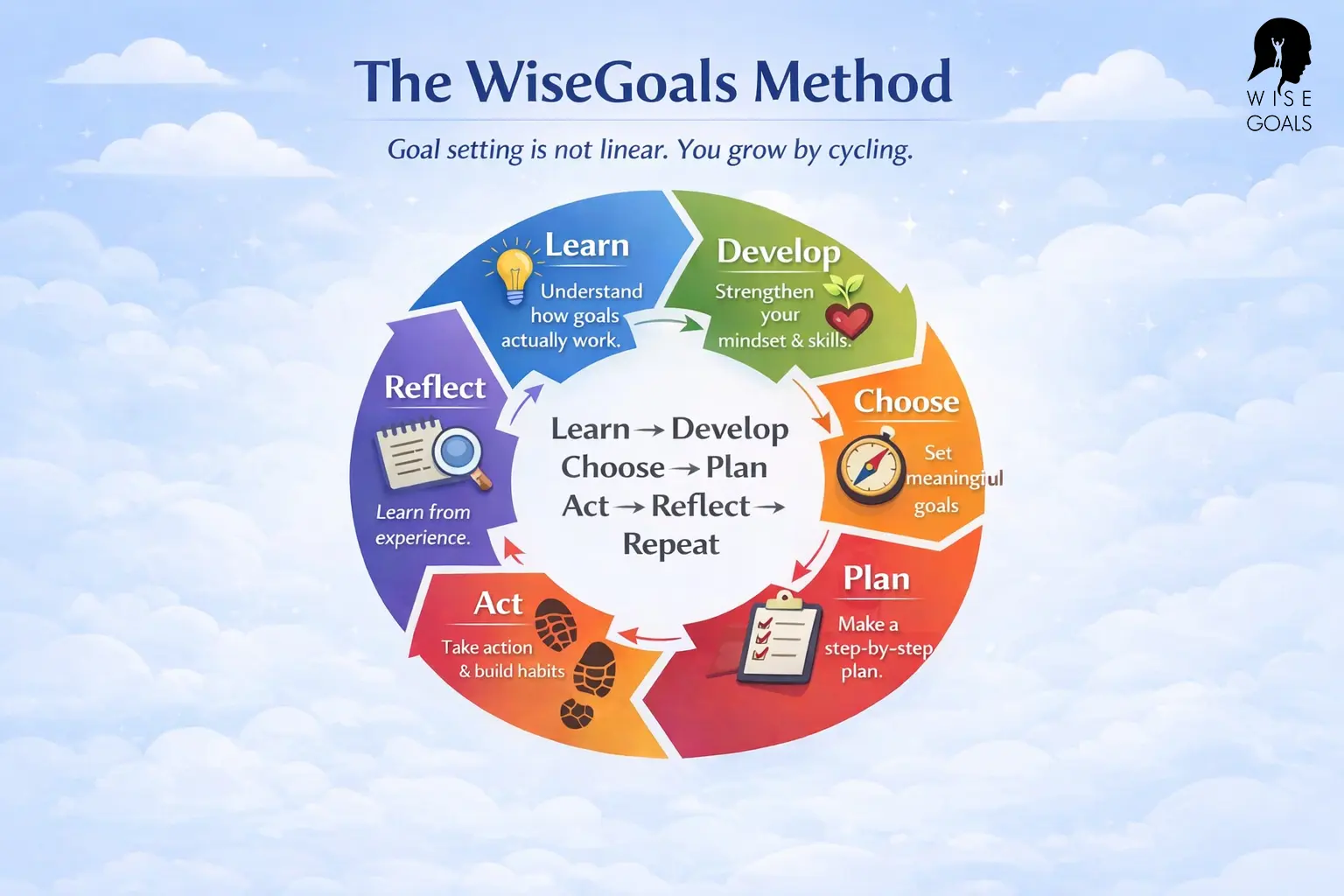
Start where you need the most support right now
Different challenges call for different starting points. Start with the area that feels most helpful right now.
If you don’t feel confident about goal setting
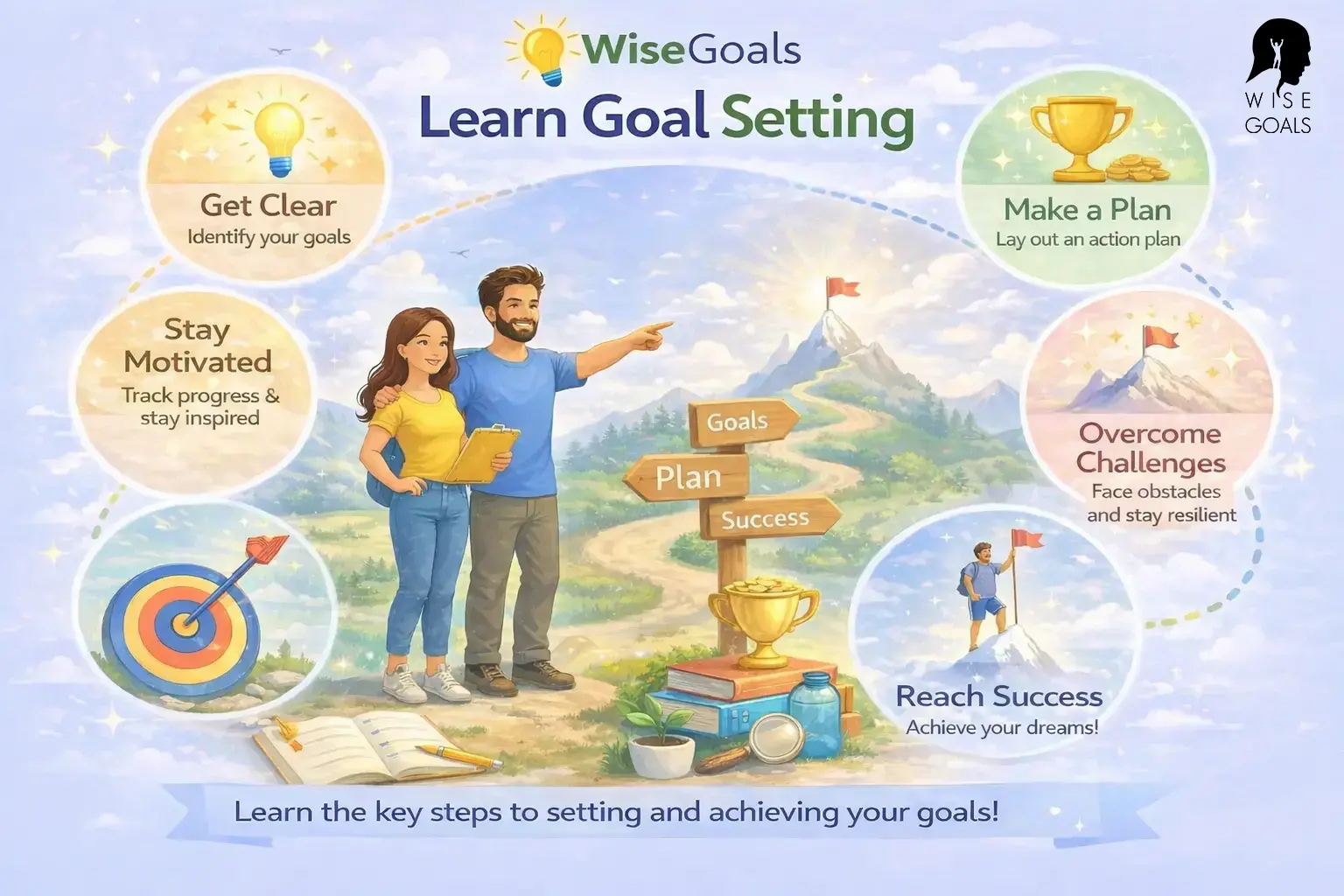
Learn how to set goals well
You might feel unsure where to start, or worry that you'll end up “doing it wrong.” Learning how goals actually work can make the whole process feel clearer and more manageable.
If you worry that you’ll get in your own way
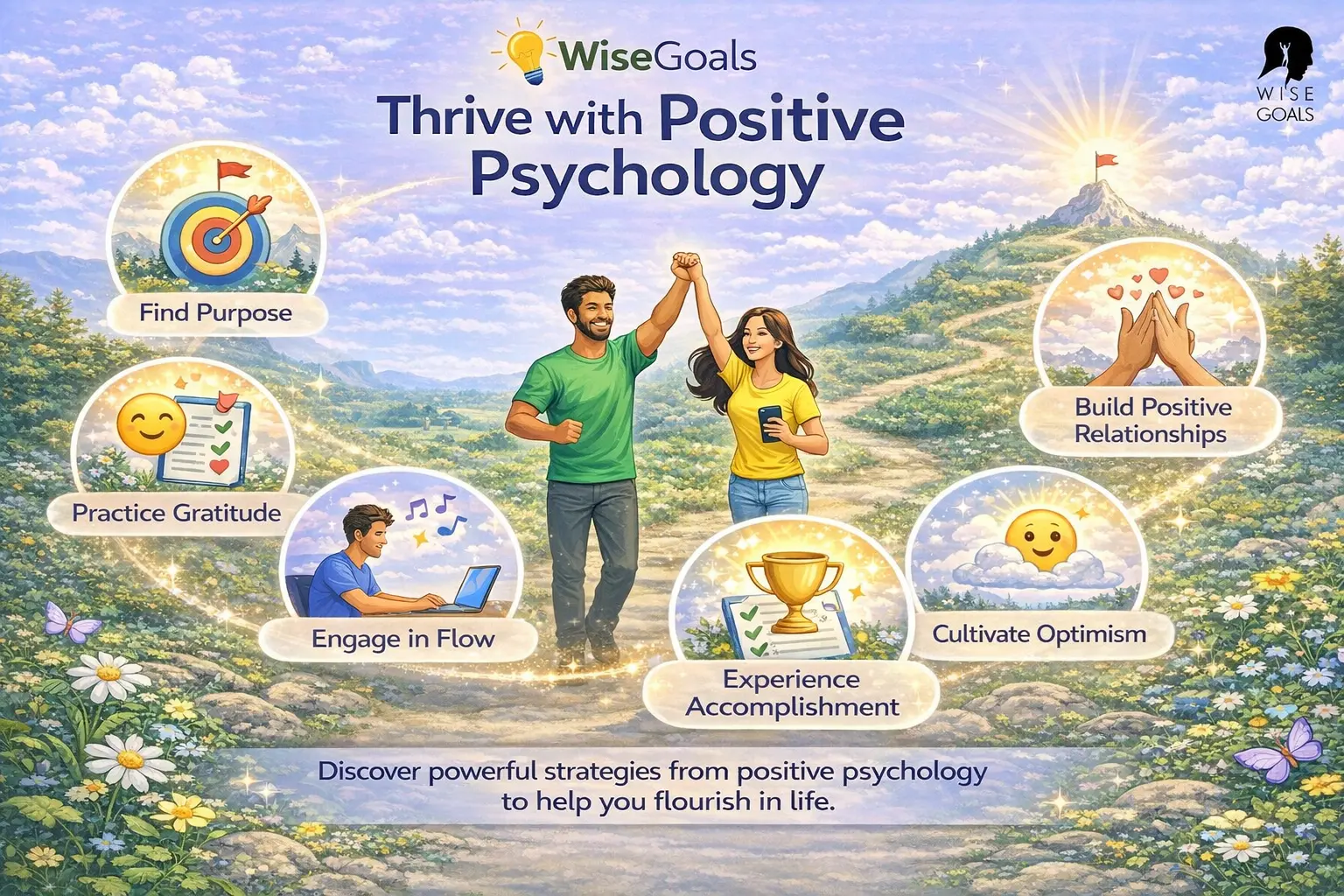
Develop psychologically
Self-doubt, motivation dips, emotional blocks, or past experiences can quietly make goals harder than they need to be. These aren’t personal flaws — they’re skills and capacities that can be developed.
→ Strengthen the psychological foundations that support progress
If you have lots of goals and don’t know what to focus on
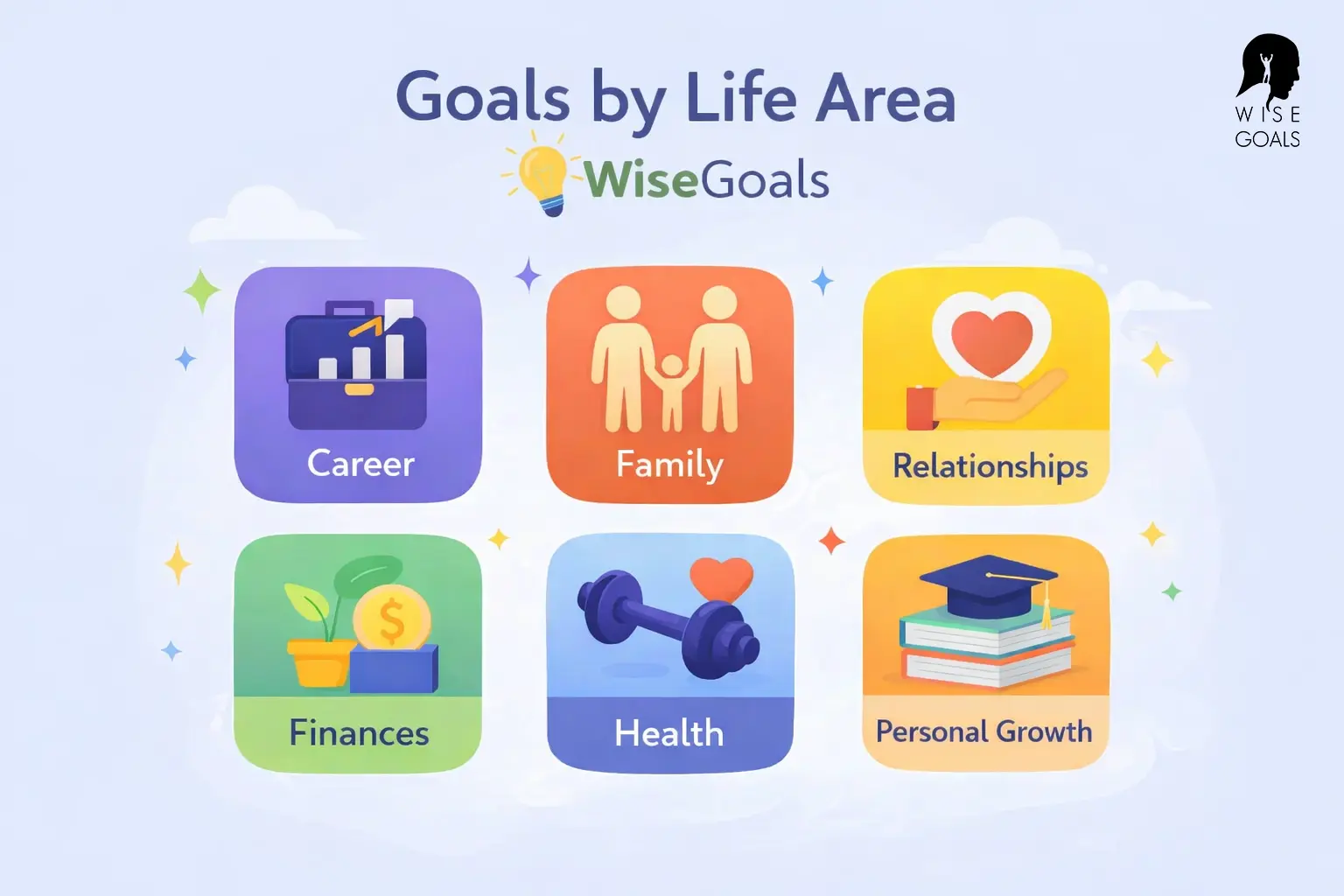
Choose a goal by life area
When everything feels important, it’s hard to move forward. Choosing the right area to work on first can bring immediate clarity and direction.
If you’re ready to turn ideas into a plan
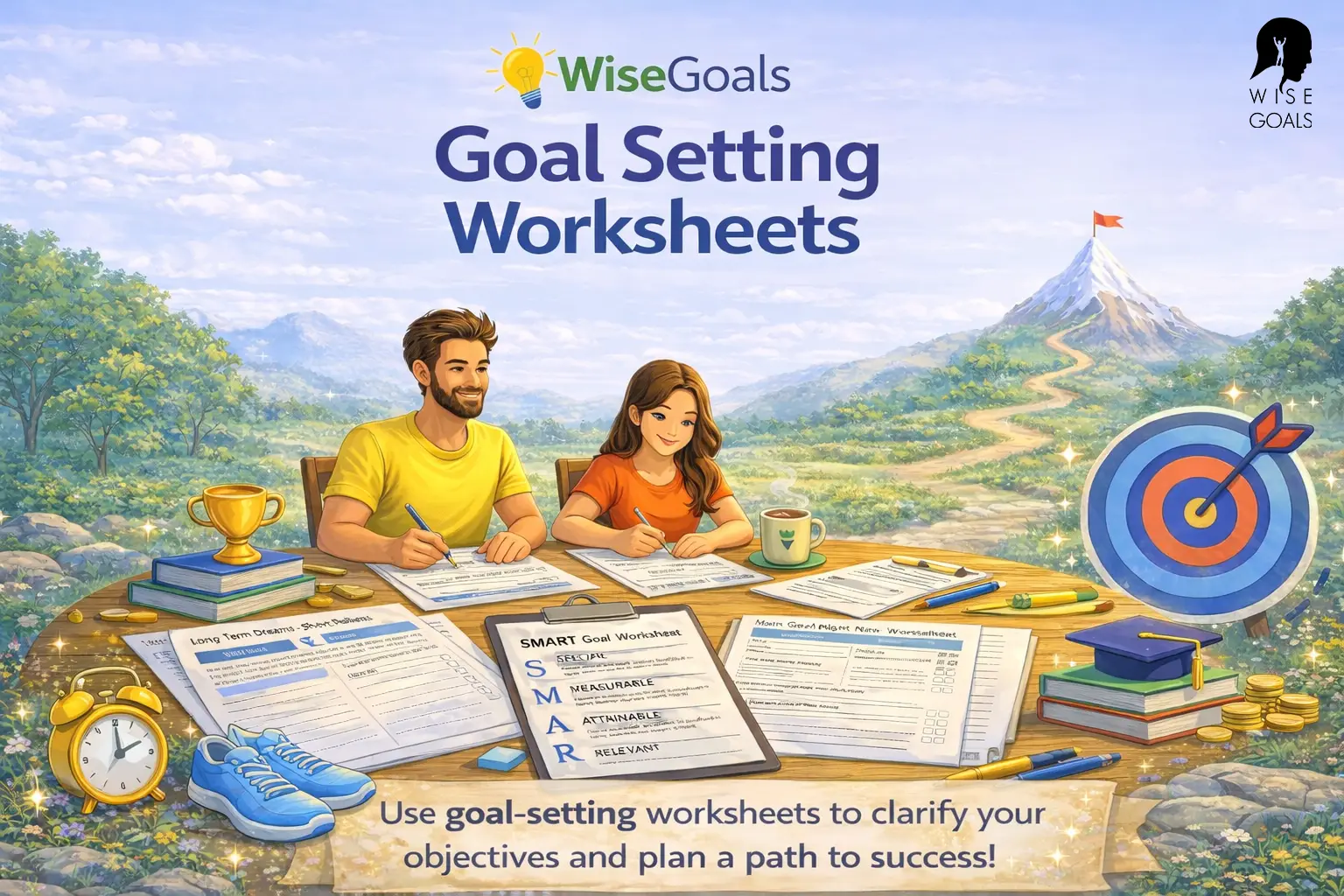
Set goals and plans with WiseGoals worksheets
Writing things down helps transform vague intentions into structured, workable goals you can actually act on.
Over time, people naturally move through all parts of the WiseGoals process — learning, developing, choosing, and setting goals — but there’s no right place to begin.
Affiliated With
Everything on WiseGoals is built on evidence-based psychology and a commitment to helping people flourish. I'm proud to be part of professional organisations that share those values.

Recent Articles


-
What Went Well Exercise: Boost Gratitude & Momentum Step-by-Step
Jan 23, 26 05:33 AM
 The What Went Well exercise shifts your focus to progress & gratitude. Learn how 5 minutes daily builds momentum!
 -
Everest Goals: How to Set Goals That Truly Inspire You
May 25, 25 11:22 AM
 Discover the power of Everest goals—meaningful, energising goals that stretch you and align with your values. Learn how to shift your own goals in this way
 -
Contribution Goals: The Shift That Changes Everything
May 25, 25 11:19 AM
 Discover the power of contribution goals and how reframing your goals as contributions can lead to greater motivation, mental wellbeing, and long-term success.