- Home
- Learn Goal Setting
- 5 Years to Live Goals
5 Years to Live Goals - A path to greater Purpose?
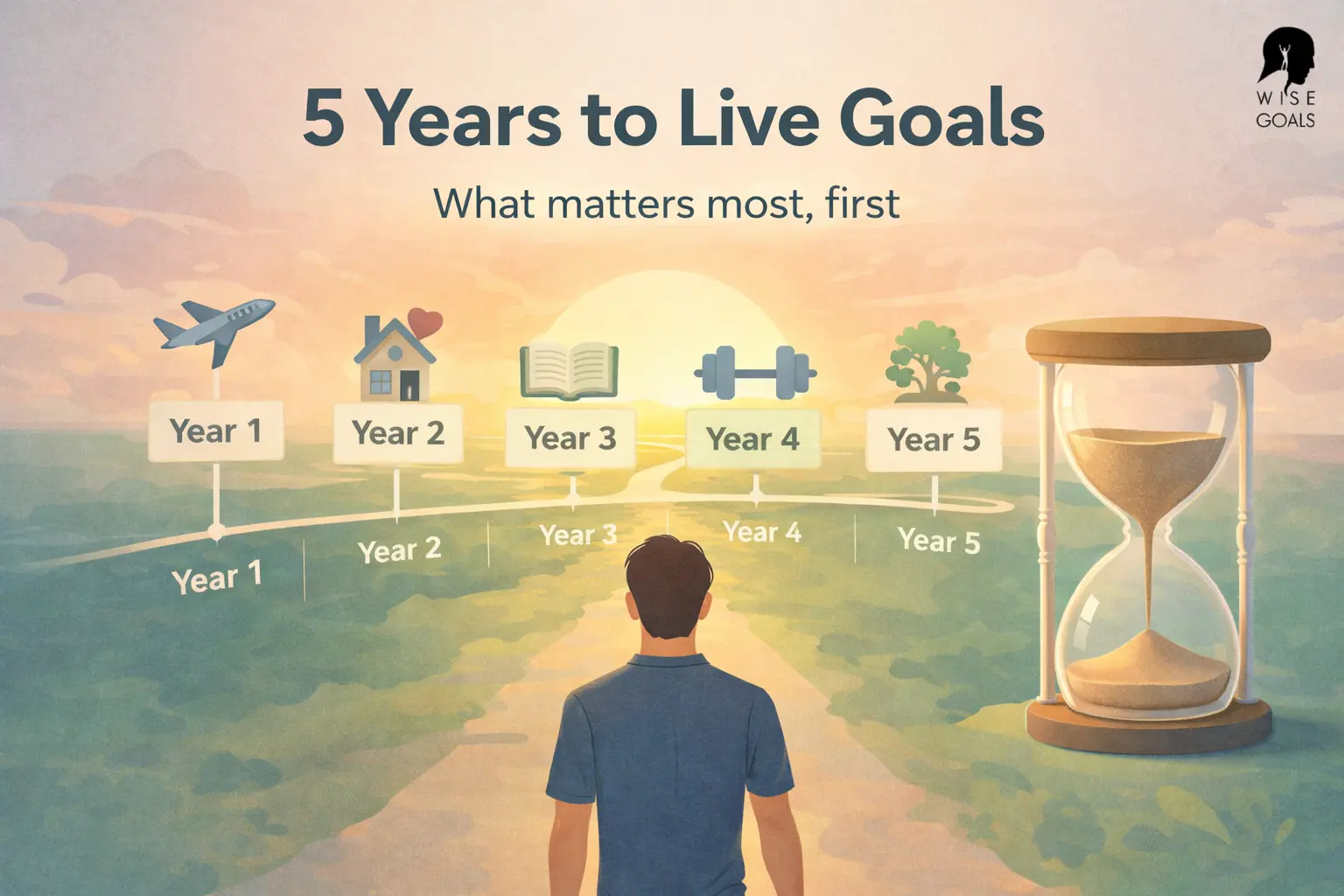
Imagine you have just 5 years to live... How would your goals change? What would like to achieve?
Have you seen the well-known Steve Jobs Stanford Commencement Address about living each day like it's the last?
It was based on his close-call with cancer and the insights were very relevant to this activity.
He said, “Remembering that you are going to die is the best way I know to avoid the trap of thinking you have something to lose,”.
Without having a brush with death similar to Steve Jobs, we can still listen in earnest and try our best to reflect on our goals making them more meaningful.
How to make this question work for you
In my coaching sessions, I ask questions that challenge my clients to think in unfamiliar ways. Using the prospect of death and the urgency of 5 years can provide new and helpful perspectives.
If the question, "what would your goals be if you had 5 years to live" doesn't quit hit the spot for you, I encourage you to explore changing it.
For example, if you're not keen on 5 years, I might ask how many years would make this question work best for you? If not 5 years to live, how about 5 years until you retire?
How to get the most out of 5 years to live goals
There are a few ways of doing this exercise. Alone, with a friend, in a small group....
If doing it with a friend you can take turns asking each other the question and give the other person 5 mins to answer while focusing on listening well.
If doing it in a small group, you can go around the group giving 3-4 minutes for each person to share uninterrupted. Hearing differing thoughts about a topic such as this can be full of learning.
If doing it by yourself, you could try it as a journaling exercise, exploring a few of the questions below.
- What is it about "5 years to live goals" that feel meaningful or interesting to you?
- If you knew that you had just 5 more years to live what would become more and less important to you?
- If you had exactly 5 years to live, what would you set out to achieve first?
- If you found out that a close friend or loved one had 5 years to live, and they asked you for advice, what would you suggest?
- Do you know of someone who found out they had a limited time to live? How did it change them?
- What role does your age play in choosing your 5 more years goals?
Remember that there is no one-way to answer these questions. There is no correct way or answer. The key is to use this tool to support your reflective experience.
Let's continue the conversation
If you have a question, would like to explore an idea further, or you're wondering how this applies to your life, send me a message using the contact form, or email me directly.
I read every message personally, and I'm always happy to help if I can.
Last updated: 12/05/26
Looking for more goal setting inspiration?
Contribution Goals: The Shift That Changes Everything
Discover the power of contribution goals and how reframing your goals as contributions can lead to greater motivation, mental wellbeing, and long-term success.
Realistic Goal Setting: Make Steady Progress in the Best Direction
The importance of using realistic goal setting cannot be overstated. Concrete, clear, achievable and challenging goals simply work.
My Best Possible Self Intervention Writing Exercise
The best possible self intervention is a powerful tool for creating optimism, a sense of direction and goal progress. Explore the roots and give it a try today

Affiliated With
Everything on WiseGoals is built on evidence-based psychology and a commitment to helping people flourish. I'm proud to be part of professional organisations that share those values.

Recent Articles


-
What Went Well Exercise: Boost Gratitude & Momentum Step-by-Step
Jan 23, 26 05:33 AM
 The What Went Well exercise shifts your focus to progress & gratitude. Learn how 5 minutes daily builds momentum!
 -
Everest Goals: How to Set Goals That Truly Inspire You
May 25, 25 11:22 AM
 Discover the power of Everest goals—meaningful, energising goals that stretch you and align with your values. Learn how to shift your own goals in this way
 -
Contribution Goals: The Shift That Changes Everything
May 25, 25 11:19 AM
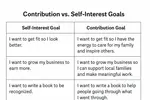 Discover the power of contribution goals and how reframing your goals as contributions can lead to greater motivation, mental wellbeing, and long-term success.